Congress
“Our Congress does not have to shoulder responsibility for kingdoms or empires: it is itself being borne by our educated middle classes coming together and seeking to give expression to the country’s will . . . If, in this mighty assembly, there is a lack of that tolerance which can enable people of all classes and views to find room in the organisation, that would only reveal the inadequacy of our strength.”
—RABINDRANATH TAGORE.
Presidential Address, Bengal Congress, 1908.
“Quit India”, the slogan of Congress, resounds in every town in Bengal today. Since the release of the Congress leaders and the breakdown of the Simla Conference in July 1945 there has been an upsurge of feeling against British rule that is hardly parallelled even in Indian politics. The court martial of the soldiers who joined the Indian National Army—formed from prisoners of war on the Japanese side to drive the British out of India—became the occasion for widespread demonstrations, and their leader Subhas Bose became a national hero. His name Is on the lips of every Congress youth today and the slogans of the I.N.A., “Jai Hind” and
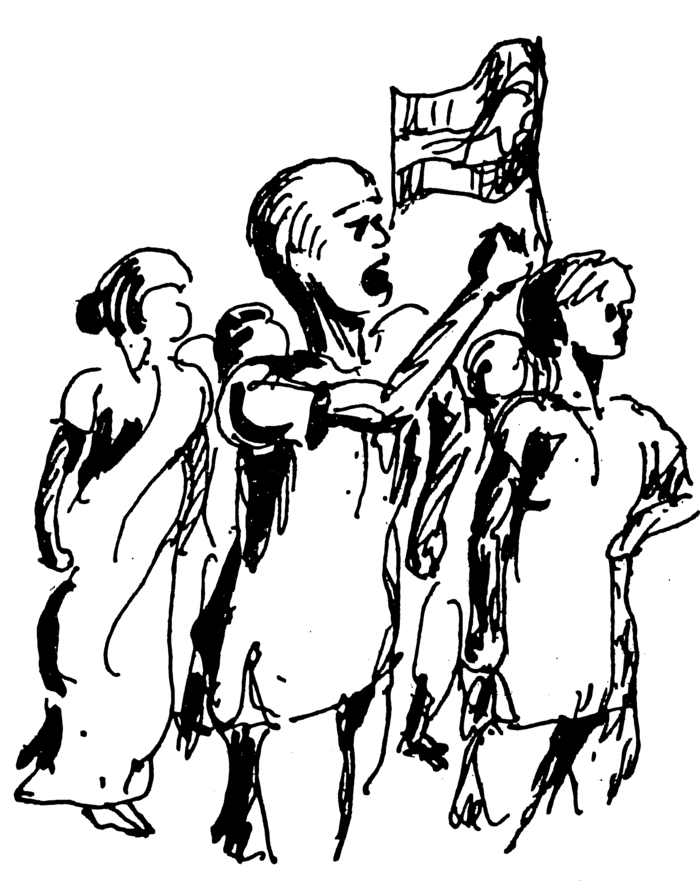
Figure 1: “Delhi Chalo” (March to Delhi) are shouted at their demonstrations.
Therefore it is not surprising that I, a Britisher, must have appeared to be prejudiced to many a Congressman when I questioned or disagreed with any aspect of his policy. To them, the Muslim League is a reactionary organisation, British-inspired, and Pakistan must be fought tooth and nail. The peasant movement is in the hands of the Communists who are traitors to the people because they sided with the Allies during the war. So it was not easy to discuss these things—if I did, it only confirmed in their minds that the British people are “imperialist-minded”. In any case, they would say, (this was before the arrival of the Cabinet Mission) had not the Labour Government, which had given rise to so many hopes, been shown to be as bad as any Tory Government? When I asked how they would get the British to quit, they told me that their movement would develop into such huge proportions that there would be no alternative for them but to go. Many of the present problems only remained because of the British policy of “divide and rule”, and with the end of this rule they would disappear. The Muslim League would be forgotten. They had a tremendous faith in their national leaders and trusted them to consider the problems of the future.
Congress is, and has been for half a century, the greatest liberation movement of the Indian people—it still claims to be the only genuine movement, representing the interests of all sections and all religions. It has always been broad and loosely organised, but today when it feels so near to power, it is very important to see what type is its leadership and what is their policy. When in the rural towns, I took every opportunity for discussions with the local and District leaders.
Congress and the Peasant Movement
A number of times I asked Congress leaders or office-bearers to help me to see Congress at work in the villages. I remember the first one I asked—he was the assistant secretary of the party in the District and a merchant of some standing. I explained that I had nor long arrived and was particularly interested in seeing the peasantry and understanding their problems. The Kisan Sabha had offered to show me their organisation at work. But I also wanted to see the Congress side of the picture.
He immediately warned me against the Kisan Sabha—it was strongly influenced by the Communists, and Congress was opposed to it. What they objected to was the way the Communists took up the immediate issues of the peasantry and used them to their own advantage, while failing to put to them the political issue of freedom from British rule. How then does Congress work in the villages?—I asked. We then talked of Gandhi’s village work, of his social uplift of the peasants and encouragement of village industry, of his campaigns for a spinning wheel in every cottage (a spinning wheel is emblazoned on the tri-colour flag of Congress). More than that, he said, Congress goes to the peasants and points out to them their grievances, explains that all these would disappear with British rule.
I asked how it was possible to go like this to unenlightened people and organise them on what was really an abstract demand—in spite of its being the root cause of their problems. Surely the basic principles of organisation are the same everywhere. In England trade-unionism was not established by educated people going to the masses of the downtrodden workers and telling them all their troubles were due to capitalism and that they should change the system of society. No, the workers got together and organised on bread and butter questions and wrung concessions out of their masters. It was as they grew in strength by their own efforts that they began to see the possibility of a socialist society. His reply was that in working in this way, the Kisan Sabha was working within the framework of Government machinery and Congress was against the Government. Rationing, control, Food Committees and such like are all part of the administration, rotten
and corrupt. I was so amazed that I asked him to repeat it, that Congress is against control and rationing at the present time. (Though it is interesting to note that the Congress Ministries in other Indian provinces never wanted to abolish control and rationing and rightly too!) To me this seemed so irresponsible, since it meant condemning millions more to die in Bengal—for however inefficient are the present arrangements, however weak are the Food Committees for instance, their removal would open the gates wider to the hoarders and profiteers. This could but mean another and perhaps a worse
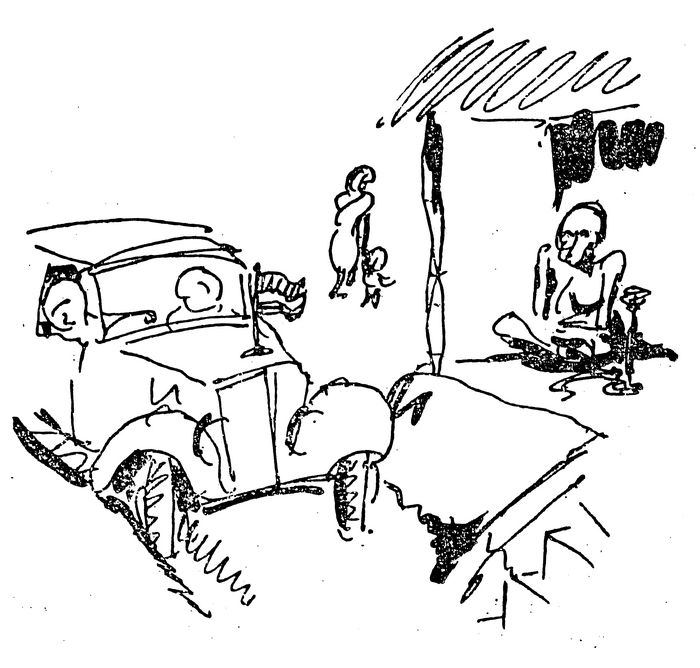
However, he did not arrange to take me to the villages— nor did other such Congress leader in any town. I heard a lot from them about Congress strongholds in other Districts, Midnapore or Chittagong, but never in their own. The only conclusion I could reach was that they did not know the peasants, the peasants could not have known them as their friends. This was made very clear to me when one of them said if they had not been so busy with the elections, he would have taken me in the car to the villages! In a car to see the peasants! Nevertheless I did see many members of Congress, men who often had been in the movement all their active lives, working with the peasants in their organisation and I also saw the widespread general support there is for Congress in the villages–very largely amongst the middle peasantry, and among poorer peasants too where there is no Kisan movement and to the peasant as such the Congress stood, in a vague way, for all that is meant by Freedom.
This opposition of the Congress leaders to the Kisan Sabha has gone so far that they are trying to launch a rival body under their own leadership. This was decided at their last all-India conference at Bombay, but the sub-committee
responsible has so far been unable to reach agreement on how it is to be done and has postponed any action for the time being. What a tragic and suicidal policy! A Congress peasants’ organisation would inevitably be answered by a Muslim League peasants’ organisation and with three bodies the divisions in town politics would be carried down to the peasantry. In the same way Congress has tried to set up rival Trade Unions to those in the All-India Trade Union Congress.
What is the reason for this attitude amongst the Congress leaders? It is mainly because they are that type of middle class and upper middle class people who, whether they realise it or not, have gained their present positions from the toil of the peasants (in Bengal they come mostly from that class
of landholders which has arisen from the Permanent Settlement). Often unconsciously their stake is on the side of the status quo—at least as far as the peasants and the common people are concerned. If the peasants’ movement were to be successful they feel they would be the losers. Moreover the stand of Congress against the peasants’ movement is attracting those zemindars and other individuals who have been known previously as the worst enemies of the people and have opposed Congress in the past. One example of the many I came across, was a certain sub-zemindar whom Congress had fought for years. They had fought him over land, they had had a court case against him, he had backed their opponent at the last elections—now he has joined Congress and is enrolling members. It is significant also that in their recent declarations, some of the top Congress leaders have proposed to compensate zemindars in settlement of the land question and have already made open pronouncements to that effect. Compensate the blood suckers of the country!
For British friends of India, who have followed the past struggles of Congress with sympathy and admiration, it is indeed tragic to realise the trends amongst its leadership now— more so if one has met those Congressmen who have made such sacrifices under its banner in the past and are now critical of the lead it is giving, or if one has seen the tremendous prestige it still retains as the freedom movement of the Indian people. One can only be confident that events will open the eyes of the people and they will carry their leaders forward and make them implement their repeated pledges to establish a “Majdoor Kisan raj” (workers’ and peasants’ regime) in India.
Congress and the Muslims
Congress is violently opposed to Pakistan. During many talks I had with local Congress leaders I heard a number of reasons for this repeatedly stated. The Muslim League is a reactionary, feudal organisation, basing its policy on religious and communal issues. It is British-inspired in the sense that it is playing the old game of divide and rule and preventing the Indian people uniting and achieving their freedom. Against this Congress holds that India is one nation and that all Indians of whatever religion or status should unite within its ranks—or at least that Muslims should support the “Nationalist Muslims” who are working with Congress.
However justified are many of these Congress criticisms of the League, it seems that certain other things should also be said to complete the analysis. Whatever were the causes, the fact is that Muslims have been left backward and the educated middle class people, the merchants and industrialists, are generally Hindus. Naturally a Hindu Congressman does not find it easy to understand how a Muslim feels about this or that. At this stage, the revolt of a Muslim against his status takes the form of resentment at the position of Hindus and the demand for Pakistan. A Congressman cannot see that behind the Muslim movement there is a genuine urge for freedom however distorted its expression may be and is the awakening of a backward section, previously almost dormant. With the British taking advantage of this unequal development of the two communities, it is but natural that a sense of mutual fear and distrust should grip them both. But the tragedy of it all is that the leaders of both these sections have yet to realise the British game and defeat it by getting over their mutual hostilities.
What of the accusation by the League that Congress is a Hindu organisation, when there are undoubtedly many Muslims within Congress? I met a number of these and without exception they had been in the liberation movement for many years—that is, since the time when Congress was the only effectual organisation and the League did not exist as a mass body. Even in those times there were relatively few Muslims, for the Hindus, naturally, the more advanced section, did the most to build up the national movement and there is nothing wrong in that. I did not meet any young Muslims or students who were backing Congress, yet there are many now in the League who were once in Congress or have worked with it, including Mr. Jinnah himself.
Moreover the anti-Muslim stand of Congress also is drawing towards it many Hindus who were previously in reactionary communal bodies like the Hindu Mahasabha—many of these incidentally are oppressive zemindars. One of the main objects of the Congress election campaign, apart from discrediting the Communists, was to show up the League and prove that it has little support—in other words Congress was utilising the elections in the same way as the League. The results however showed up the lack of Muslim support for the Congress, for, except [in] North-West Frontier Provinces, most of the Muslim candidates put up or backed by Congress lost heavily to the League nominees. The fact that this gets nobody any further towards unity and freedom is the very indication that the policies on both sides are futile and is the reason why the elections meant so little to the peasantry.
I had many discussions with Congressmen about their claim that India is a single nation. To me it seemed so clear that it is not—any more than Europe is. A Frenchman and an Italian are surely as different as a Punjabee and a Bengalee.
They have the same sort of differences in language, culture and outlook—in fact the only peculiarity of the Indians in this comparison is that in their case they are both subject to the same foreign ruler. Some Congressmen would say it is old fashioned to have small nations, that the tendency should be towards big communities and ultimately a world community and that the continuous wars between the nations of Europe hardly demonstrate the desirability of muti-national solutions. My reply would be that the nations of Europe are not people’s states, and that a people’s Europe would not be at war even though it were multi-national, any more than a multi-national people’s India would have internal strife. In any case India is still a feudal country and is it not most likely that its peoples will go through the stage of developing their own nationalities? Might it not be that the way to achieve real unity throughout India is by giving the peoples of different nationalities their own freedom, the right of self determination? Some Congressmen would agree that India really is many nations but they thought that this problem must sort itself out after the British have gone, it has no relevance to the immediate question of freedom from British rule. They would not concede that by taking a clear stand for self-determination for the different peoples of India they would help to arouse the backward sections—nor would they agree that Pakistan might be the distorted manifestation of a such an urge, or that other communities in India, besides the Muslims, are making their own voice heard even now.
National Leadership
What of the all-India leadership in which the Congress youth has such abounded faith? Even from the daily papers it can be seen to be full of contradictions. When Birla, an Indian big business man as well as a power behind Congress, had a strike in one of his large enterprises, who were the people to support? Should they sympathise with the workers who have the usual inhuman conditions in Indian factories and have built up a strong Trade Union—or should they back the Congressite boss? Again, at the very time that Calcutta was seething with demonstrations for “Quit India” and leaders were saying that the British hold on India had irretrievably weakened, Gandhi had no less than seven private interviews with the Governor and the Viceroy came to the city specially for discussions—many times before, Gandhi has negotiated compromises with the British rulers. Nehru used to be well known as a socialist, but now he appeals to the Princes to become enlightened and install progressive regimes—previously these same Princes had been condemned by Nehru himself to be feudal and reactionary, mere puppets who only survived because of the support the British gave them and who would have to be swept away in any solution of the Indian problem.
At its last conference (September, 1945), Congress virtually declared war on the Muslim League. Who could suggest this helped the unity of the Indian people? And who stands to gain by rival peasants’ organisations and Trade Unions other than the zemindars, the industrialists and the British authorities? Have not the violent anti-Communist sentiments and accusations which continually come from the leadership encouraged the riff-raff and the hooligan elements to carry out their numerous assaults on individual Communists—in the name of Congress? (At Bombay they even set fire to the Communist Headquarters, injured a large number of persons and partly destroyed their printing press.) Has all this helped towards national unity?
There can be no doubt that a similar development has taken place in the leadership at the top as has happened in the case of the local leaders in Bengal. In the same way that, in Bengal, zemindars, merchants and other middle class sections oppressing the people have found their place in Congress to fight the peasant—on a national scale the Indian industrialists and other powerful elements of the middle class are in Congress opposing the organisations of the common people, both the peasantry and the industrial workers. No doubt they desire freedom from British rule which they so vigorously demand, but to them this cannot mean freedom for the people from all oppression—for then their own position would be threatened. Under these circumstances, notwithstanding all the campaigns for “Quit India”, there is always the possibility of an attempt at a compromise solution with the British administration—in reality directed against the forces of the people. Indeed even before the British Cabinet Mission arrived, Congress leaders were exhorting the people to stop the waves of strikes and demonstrations that were sweeping India and telling them that “freedom is coming this year”, that they should test the sincerity of the British Government by waiting for the results of the negotiations. Do they not realise that the very fact that as many as three Cabinet Ministers were spared to come to India was in itself a measure of this “unrest” in India? Why not arouse the people? Are they afraid of an angry people they will not be able to control?
Most tragic is the fact that this opposition to the common people finds them sometimes at one with the British authorities. Thus Patel, a most important Congress leader, can say of the unrest in connection with the Royal Indian Navy strikes in Bombay (with Nehru sitting on the same platform) “There is much talk of condemning this firing. True, in some places the firing was excessive. But tomorrow after we get power, if such goondaism (hooliganism) takes place, we might have to resort to firing also . . . If on such occasions we have to use the military, what will you say then?” (And actually the Congress Ministry in Bombay which assumed office a few months later decorated with medals some of the police officers who became conspicuous by their suppression of the unrest following the August movement.)
Therefore, in spite of the fact that Congress is still the movement which represents the aspirations of large sections of the Indian people, the present policy of its leadership will not achieve that freedom from all oppression which the masses of the common people desire. Ten or twenty years ago Congress might have led India as a whole on at least the first steps to her freedom—independence from British rule. Today however, the leadership, like that of the Muslim League, is becoming more and more opposed to the forces of the people and more eager to come to some sort of deal with the British. Now the peasants and the workers—the common people of India—have powerful and growing organisations struggling against their oppressors, brown and white, and backward sections and communities are awakening who want their national independence. It is these new forces, together with the masses of the ordinary Indians who support Congress and the League, who will achieve real independence for India. And freedom for them must solve their basic demands for food and land, for jobs and human conditions of work and living.